
Key Point:
• New Jersey's Prevention of Domestic Violence Act (N.J.S.A. 2C:25-17 et seq.) provides two types of restraining orders: a Temporary Restraining Order (TRO) and a Final Restraining Order (FRO).
• A TRO can be obtained the same day you apply; an FRO requires a full court hearing within 10 days and remains in place permanently until formally dismissed by the court.
• Understanding the difference between a TRO and an FRO is essential, whether you are seeking protection or defending against allegations.
What Is a Restraining Order in New Jersey?
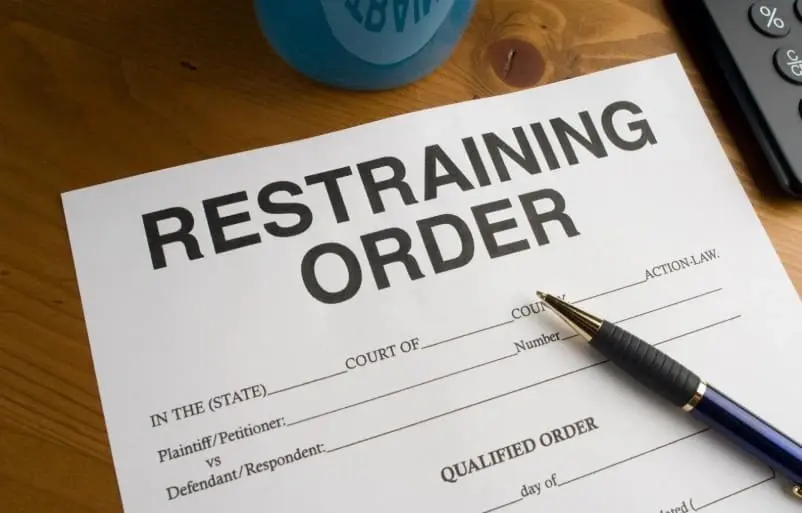
A restraining order is a court-issued directive that prohibits one person (the defendant) from having contact with another person (the plaintiff). In New Jersey, restraining orders are governed by the Prevention of Domestic Violence Act and are available to individuals who have experienced domestic violence at the hands of a current or former spouse, dating partner, household member, or co-parent.
The statute covers a wide range of acts that qualify as domestic violence, including assault, harassment, stalking, terroristic threats, criminal mischief, criminal restraint, and sexual assault, among others. You do not need to have been physically injured to qualify for a restraining order.
Step 1: Filing for a Temporary Restraining Order (TRO)
A TRO can be obtained quickly. During court business hours, you file at the Family Division of the Superior Court in the county where you live or where the domestic violence occurred. After hours, on weekends, and on holidays, you can obtain a TRO through the municipal court.
The process involves completing a domestic violence complaint form and speaking with a judge, either in person or by phone. The judge will evaluate whether you have established a prima facie case of domestic violence. You do not need an attorney to obtain a TRO, though having one can help you present the strongest possible case.
If the judge grants the TRO, it takes effect immediately. The defendant will be served by law enforcement and must comply with all conditions, which may include:
-
No contact with the plaintiff (in person, by phone, text, email, or through third parties)
-
Vacating a shared residence
-
Surrendering firearms
-
Temporary custody of children
-
Temporary child support or spousal support
Step 2: The Final Restraining Order (FRO) Hearing
Within 10 days of the TRO being issued, a hearing is scheduled in Superior Court for the FRO. This is a full evidentiary hearing where both sides can present testimony, witnesses, and evidence. The judge must find two things:
-
An act of domestic violence occurred (one of the predicate acts listed in the statute)
-
A restraining order is necessary to protect the plaintiff from future acts of domestic violence (applying the factors from Silver v. Silver, 387 N.J. Super. 112 (App. Div. 2006))
If the judge grants the FRO, it remains in place permanently until formally dismissed by the court. The protected party can file a motion to dissolve the FRO, but the court will evaluate whether the circumstances have changed sufficiently to warrant dissolution. The defendant cannot file to dissolve the FRO on their own in most cases (Carfagno v. Carfagno, 288 N.J. Super. 424 (Ch. Div. 1995), sets out the factors).
Step 3: What an FRO Means Long-Term
An FRO is not a temporary measure. It carries significant, permanent consequences for the defendant:
-
Criminal penalties for violation: Violating an FRO is a fourth-degree crime under N.J.S.A. 2C:29-9(b), carrying up to 18 months in prison
-
Firearms prohibition: The defendant must surrender all firearms and is permanently barred from obtaining a firearms purchaser ID or permit to carry
-
Custody implications: An FRO will be considered in any custody or parenting time determination
-
Employment impact: An FRO appears in background checks and can affect professional licensing
If You Are the Defendant
Being served with a TRO is serious, but it is not a conviction. The TRO is temporary and based on the plaintiff's allegations alone. The FRO hearing is your opportunity to present your side. Common defenses include:
-
The alleged act does not qualify as a predicate act under the statute
-
The incident did not occur as described
-
No ongoing need for protection exists (the Silver v. Silver factors weigh against an FRO)
-
The TRO was filed as a tactical move in a divorce or custody dispute
Having an experienced family law attorney at the FRO hearing is critical. The stakes are high, and the hearing happens fast.
Domestic Violence Resources
If you are in immediate danger, call 911. The National Domestic Violence Hotline is available at 1-800-799-7233 (1-800-799-SAFE). New Jersey also operates county-based domestic violence programs that can provide shelter, counseling, and legal advocacy.
FAQ
How quickly can I get a restraining order in NJ?
A TRO can be obtained the same day you file. During business hours, go to the Family Division of the Superior Court. After hours, municipal courts can issue emergency TROs.
What is the difference between a TRO and an FRO?
A TRO is temporary (lasting until the FRO hearing, typically within 10 days). An FRO is permanent until formally dismissed by the court.
Can an FRO be dropped?
The protected party can file a motion to dismiss the FRO. The court will evaluate whether circumstances have sufficiently changed. The defendant generally cannot file to dissolve an FRO.
Does a restraining order affect custody?
Yes. An FRO is a significant factor in custody determinations and can restrict the defendant's parenting time.
What happens if someone violates a restraining order?
Violation of an FRO is a fourth-degree crime under N.J.S.A. 2C:29-9(b), carrying up to 18 months in prison and a potential fine.
Call to Action
Whether you need protection from domestic violence or are defending against a restraining order, our family law team can help protect your rights through the legal process. At Villani & DeLuca, P.C., we handle TRO and FRO matters throughout Ocean County, Monmouth County, and Middlesex County.
Call (732) 709-7757 or fill out our free case evaluation form for a confidential consultation. Offices in Point Pleasant Beach, Red Bank, and Brick Township.
Reviewed By: Carmine R. Villani — August 10, 2026
Disclaimer: This blog post is for informational purposes only and does not constitute legal advice. Every case is different. Past results do not guarantee future outcomes.

Comments
There are no comments for this post. Be the first and Add your Comment below.
Leave a Comment