

Key Point:
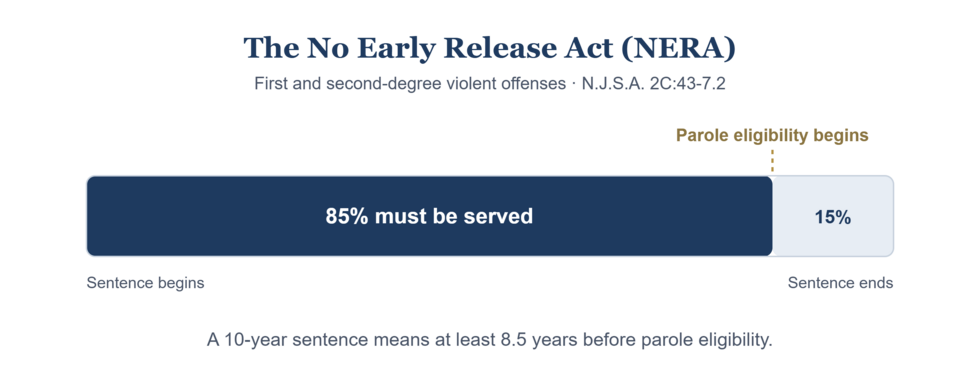
• Violent crime convictions in New Jersey for first or second-degree offenses fall under the No Early Release Act (N.J.S.A. 2C:43-7.2), requiring at least 85% of the sentence be served before parole eligibility
• Domestic violence charges trigger protections under the Prevention of Domestic Violence Act (N.J.S.A. 2C:25-17 et seq.), including temporary and final restraining orders that carry separate criminal penalties if violated
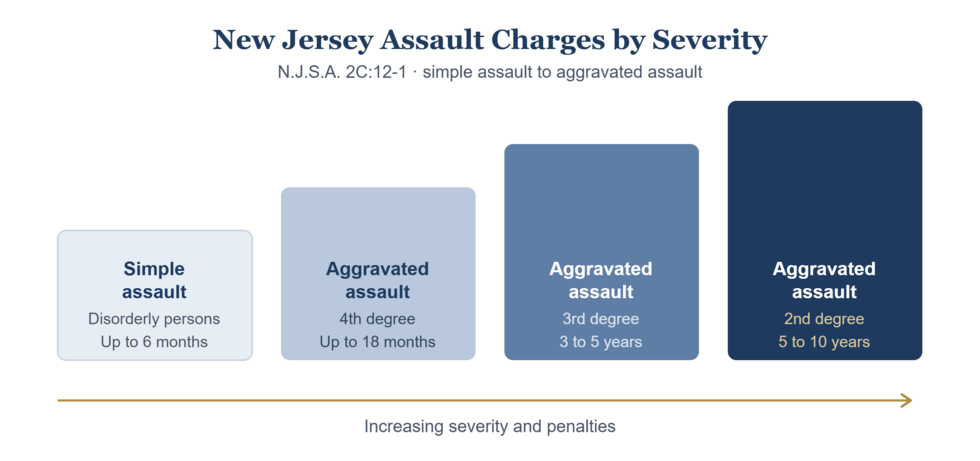
• Aggravated assault (N.J.S.A. 2C:12-1b) is graded second through fourth degree based on injury severity, weapon use, and the victim's status, while simple assault is a disorderly persons offense
Violent crimes in New Jersey include offenses where a person threatens or causes physical harm to another. These crimes can range from minor altercations to serious felonies, and even seemingly minor charges can carry long-term consequences for your criminal record, personal freedom, and future opportunities.
Whether you are facing assault, domestic violence allegations, weapons charges, or other violent crime accusations, understanding the law and the potential consequences is critical. Villani & DeLuca have decades of experience defending clients against all types of violent crime charges in New Jersey.
Understanding Violent Crimes in New Jersey
Violent crimes involve actions that harm or threaten another person's safety. The law distinguishes among various types of offenses based on factors such as intent, the use of a weapon, the relationship between the parties, and the severity of injury.
Penalties can range from fines and probation to significant prison sentences, and a conviction can have lasting impacts on employment, housing, and personal relationships. Below is an overview of common categories of violent crimes in New Jersey:
Assault & Aggravated Assault
Assault can range from minor physical altercations to severe attacks that cause bodily injury. Aggravated assault involves purposely or recklessly using a deadly weapon, causing serious bodily harm, or assaulting protected individuals like police officers or public employees.
Simple assault is usually a disorderly persons offense, while aggravated assault is treated as a felony, classified from second to fourth degree depending on the circumstances. Factors such as the weapon involved, the victim's role, the severity of injuries, and where the incident occurred all affect the level of charges and potential penalties.
Weapons Charges
Possessing, carrying, or using a weapon without proper authorization can result in criminal charges. Even if a gun is not used to injure anyone, violations have serious consequences, including fines, imprisonment, and restrictions on firearm ownership. New Jersey law treats weapon offenses seriously, with penalties varying based on the type of weapon and the context of the crime.
Robbery
Robbery occurs when someone takes property from another person by force, intimidation, or threat of immediate harm. Charges become more severe if a weapon is used or someone is injured during the incident. Convictions are considered serious felonies and carry substantial fines and prison terms depending on the severity and circumstances of the crime.
Domestic Violence
Domestic violence includes physical, emotional, verbal, or sexual abuse against family members, household members, or intimate partners. The Prevention of Domestic Violence Act provides protections such as temporary and final restraining orders to keep victims safe. Offenses can range from disorderly persons charges, like simple assault or harassment, to first-degree felonies, depending on the severity of harm or repeated violations.
Terroristic Threats
Making threats to harm someone or intimidate the public is a crime, even when no physical harm occurs. Threats can be verbal, written, or electronic and are taken seriously under New Jersey law. Convictions can lead to imprisonment, fines, and mandatory supervision depending on the circumstances.
Endangering the Welfare of a Child
Endangering a child happens when an adult's actions put a child at risk of harm, including physical abuse, neglect, or unsafe environments. Penalties can be severe even when no bodily injury occurs. The law considers child endangerment a criminal offense, and consequences depend on the level of risk or harm to the child.
Stalking
Stalking involves repeated harassment, following, or threats that put someone in fear for their safety. This can include unwanted communication, surveillance, or intimidation over time. Convictions carry penalties such as fines, probation, imprisonment, and restraining orders to protect the victim.
Harassment & Restraining Order Violations
Harassment includes repeated unwanted contact, offensive communications, or physical intimidation. Most charges are petty disorderly persons offenses, but a conviction results in a permanent criminal record. Violating a temporary or final restraining order is a separate criminal offense that can result in jail time, fines, and other long-term consequences.
Penalties and Legal Consequences
The consequences for violent crimes depend on the severity of the offense, the use of weapons, and the relationship between the parties involved. Charges can range from disorderly persons offenses to first-degree felonies, and convictions can affect employment, housing, and professional licenses.
-
Assault & Aggravated Assault: Severity is determined by factors such as the weapon used, the role of the victim, and the extent of injury. Aggravated assault may prevent employment in public schools or positions involving vulnerable populations.
-
Weapons Charges: Penalties consider the type of weapon and whether it was used to threaten or injure someone, with long-term restrictions on firearm ownership possible.
-
Robbery: Charges are heightened when a weapon is involved or if injuries occur during the incident, with long-term criminal consequences.
-
Domestic Violence: Restraining order violations and repeat offenses can increase penalties, including prison time, fines, and mandatory programs.
-
Terroristic Threats: Threats that intimidate or cause fear, even without physical harm, carry serious consequences.
-
Endangering the Welfare of a Child: Penalties are based on risk or harm to the child, including potential restrictions on custody or working with minors.
-
Stalking and Harassment: Repeated unwanted contact or intimidation can lead to probation, fines, or imprisonment, with restraining orders adding additional consequences.
Even minor offenses can create long-term impacts on one's record and future opportunities, making careful legal representation essential.
Defense Strategies and Legal Representation
Villani & DeLuca develop a defense strategy for each case based on the specific circumstances of the alleged crime. Common approaches include:
-
Self-Defense or Defense of Others: Demonstrating that the force used was necessary to prevent imminent harm.
-
Lack of Intent or Recklessness: Showing that the actions were accidental or did not meet the legal standard for criminal intent.
-
Challenging Evidence: Questioning the reliability of eyewitnesses, surveillance footage, or police procedures.
-
Disputing Classification or Severity: Arguing that charges should be reduced based on circumstances, such as downgrading an aggravated assault or reassessing threats.
-
Restraining Order Defenses: Proving compliance with court orders or addressing issues of misidentification in harassment or restraining order cases.
With decades of experience defending violent crime cases, our attorneys guide clients through the legal system while protecting rights and minimizing potential penalties.
Contact Villani & DeLuca, P.C.
Facing violent crime charges in New Jersey can be overwhelming and carry serious long-term consequences for your freedom, record, and future opportunities. Villani & DeLuca, P.C. provides experienced legal guidance and personalized defense strategies to protect your rights at every stage of the process. Call us today at (732) 709-7757 to schedule a free consultation with one of our skilled New Jersey criminal defense attorneys.
Client Testimonial
"In such a tough time for anybody to go through, Vincent was there for me. He makes everything more understandable for you. And he is also such a tremendous professional about it.It also helps that it was very affordable. His prices are much lower than most.If you are feeling lost and unsure about your options, CALL VINCENT... He will guide you through this tough time of your life.Vince is a HOMERUN" – Ralph Yezza
"I could not have asked for a better attorney. Mr. Villani spoke with me the same day I called his office, he was able to make my situation swift and painless. I couldn't have asked for a better out come. Thank you for you amazing services" – Steve Voorhees
"Ending a marriage is very difficult but Mr. DeLuca was very helpful in mediating our agreement in a very fair way. Mr. DeLuca made sure to let us both know the rules and entitlements and help guide us to make good fair decisions. Our mediation was done quickly and efficiently and we are grateful to have chosen Mr. Deluca to work with us.Mr. DeLuca's paralegal, Sue, was also excellent. Sue was quick to get back to us when making appointments or getting us information.I highly recommend Mr. DeLuca, Sue , and the team at Villani & DeLuca!" – Renee H
Frequently Asked Questions
1. What exactly is considered a "violent crime" in New Jersey?
Under New Jersey law, violent crimes are generally defined as offenses where physical force is used, threatened, or attempted against another person. This broad category includes aggravated assault, robbery, kidnapping, and homicide. Because these offenses are viewed as threats to public safety, they are prosecuted as high-degree "indictable offenses" (felonies) and carry much more severe penalties than non-violent crimes.
2. Will I be kept in jail while my case is pending?
Since New Jersey moved away from a traditional cash bail system, the court uses a "risk-assessment" process. For many violent crime charges, there is a "rebuttable presumption" of detention, meaning the state starts with the intent to keep you in jail until trial. However, a skilled violent crimes attorney can challenge this at a detention hearing by presenting evidence that you are not a flight risk or a danger to the community, potentially securing your release under court-ordered supervision.
3. What is the "No Early Release Act" (NERA)?
The No Early Release Act is one of the most critical laws to understand if you are facing a conviction for a first or second-degree violent offense. NERA requires that a defendant serve at least 85% of their sentence before becoming eligible for parole. Unlike non-violent offenses, where you might be released early for good behavior, NERA ensures that individuals convicted of violent acts spend the vast majority of their sentence behind bars.
4. Can a violent crime charge be downgraded or dismissed?
Yes. It is a common misconception that once a charge is filed, it cannot be changed. An experienced criminal defense attorney can investigate the case for procedural errors, such as illegal searches or coerced statements. If the evidence is weak or your rights were violated, we may be able to have the charges dismissed or "downgraded" to a lower-degree offense that does not carry mandatory prison time or NERA requirements.
5. Is it possible to expunge a violent crime from my record?
In most cases, no. Under New Jersey's expungement statutes (N.J.S.A. 2C:52-1 et seq.), many violent offenses, including robbery, aggravated sexual assault, and homicide, are permanently barred from expungement. Eligibility depends on the specific offense, its grading, and your overall record. Because expungement rules are detailed and offense-specific, you should consult with a violent crimes attorney to confirm whether any part of your record may qualify.
Trusted Resources
New Jersey Courts, Criminal Division - Superior Court, https://www.njcourts.gov/courts/superior/criminal
New Jersey Division of Criminal Justice, Official Website, https://www.njoag.gov/about/divisions-and-offices/division-of-criminal-justice-home/
New Jersey Legislature, N.J.S.A. 2C:43-7.2 (No Early Release Act), https://www.njleg.state.nj.us/laws/2c/2c-43-7.2
Villani & DeLuca, P.C., NJ Assault Laws Statute Breakdowns, https://www.villanideluca.com/resources/new-jersey-statutes/nj-assault-laws
Villani & DeLuca, P.C., Legal Glossary, https://www.villanideluca.com/resources/legal-glossary